Do you believe in the healing power of nature? Research has shown that the growing urbanisation and technological advancements of today lead to disconnection from nature and increased stress levels. As a result, there is a pressing initiative to reintegrate nature into our lives in order to restore our well-being and equilibrium once more. However, this is not a novel phenomenon in this century.
The concepts of the interconnectedness of all living things and the healing power of nature have long been recognised and observed in many cultures. In Japan, a practice that brings people closer to nature to promote their overall well-being originated in ancient Shinto and Buddhist traditions. This practice is now supported by numerous modern scientific studies and is officially promoted by the Japanese government under a scheme called Shinrin-yoku, or “forest-bathing”.
Shinrin-yoku
Shinrin-yoku translates to “forest-bathing”. When talking about forest-bathing, some people may think about active physical exercise or challenging hiking through the hills. However, Shinrin-yoku is a combination of physiological and mental exercises.
The practice of modern Shinrin-yoku dates back to the 1980s. It encourages mindful observation and reconnecting ourselves to nature, particularly forests. It’s primarily about slowing down, being present in nature, and engaging all of your senses while immersing in nature.
The Origins of Shinrin-yoku
Numerous studies around the world have found that spending time in nature can have a range of health benefits, including reducing stress, lowering blood pressure, boosting immune system function, and improving overall well-being.
In Japan, despite the practice of forest-bathing being observed since ancient times, it wasn’t until recently that the government officially established the Shinrin-yoku programme.
The term “Shinrin-yoku” was coined by the Japanese government’s Forest Agency in 1982 as part of a national public health campaign aimed at promoting forest therapy. Japan’s Forest Agency had spent $4 million conducting extensive research on the health benefits of spending time in forests.
In 2004, the International Society of Nature and Forest Medicine (INFOM) was set up to perform more studies to further develop scientific understanding of forest therapy, which helped to popularise the practice of Shinrin-yoku in Japan. Since then, more studies have been released to confirm numerous health benefits associated with forest-bathing.
Today, Shinrin-yoku is recognised as a legitimate form of preventative health care in Japan and the concept of forest therapy is increasingly being integrated into health and wellness programmes in many other parts of the world.
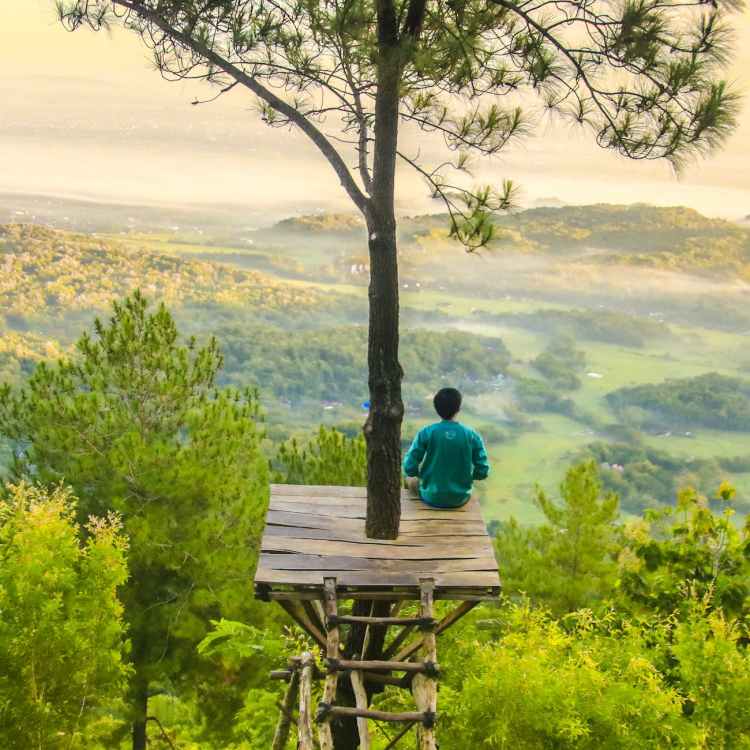
Forest-Bathing Popularity
Many Japanese regularly engage in Shinrin-yoku as a way to rejuvenate themselves. It’s common for people to take day trips or weekend retreats to forested areas, where they can participate in guided forest therapy walks and other nature-based activities.
Also, many companies in Japan have started to incorporate this practice into their employee wellness programmes as a way to improve productivity and reduce stress-related absenteeism. Forest therapy is also being integrated into healthcare settings, such as hospitals and nursing homes, as a complementary therapy to promote healing and improve quality of life.
Benefits of Forest-Bathing
Forest-bathing, or just spending time in nature among trees, can have several effects on the brain and contribute to a sense of calm and relaxation. Here are just a few ways in which forest-bathing can do to your brain and body.
Benefits to the Brain
- Attention Restoration
In the modern urban environment with high levels of stimuli and distractions, forest-bathing provides a retreat and allows the brain to engage in “soft fascination” – effortless attention where the mind can wander and relax without the need for directed focus. Such attention restoration can refresh the mind and enhance cognitive functioning.
- Mindfulness and Presence
One of the key purposes of forest-bathing is to encourage mindfulness and being fully present in the moment. When surrounded by nature, especially among trees, we often become more attuned to our surroundings and engage our senses. When the mind is fully immersed in the present moment, we temporarily detach ourselves from the worries and pressures of daily life.
- Restored Cognitive Function
Research suggests that spending time in nature, including among trees, can improve cognitive function. Nature exposure can enhance attention, creativity, problem-solving, and memory. By giving the brain a break from constant stimuli and mental fatigue with forest-bathing, you can benefit from overall cognitive restoration and mental clarity.
Benefits to the Body
- Boosted Immune System
Phytoncides, the antimicrobial volatile compounds emitted by trees, have been found to have potential immune-boosting effects. Breathing in these compounds while spending time among trees may enhance the activity of natural killer cells and other components of the immune system, thus supporting overall immune function.
- Lower Blood Pressure
Studies have suggested that by exercising in forests or simply looking at trees can lower blood pressure as well as heart rate. The peaceful and calming environment of forests, combined with reduced stress levels, could be one of the best natural remedies and prevention which is beneficial for cardiovascular health.
- Reduced Stress and Cortisol Levels
Studies have showed that the presence of trees and natural environments has a soothing effect on the mind, promoting relaxation, and lowering cortisol – a hormone associated with stress. This reduction in stress hormones can help calm the mind and create a sense of tranquillity.
How to Practice Forest-Bathing
At this point, I hope you’re curious about how to practice Shinrin-yoku, and whether it’s possible to do so without actually travelling to Japan.
The good news is that you don’t need to be in Japan, but a connection with nature or an area surrounded by trees is needed. That’s why the practice is translated as forest-bathing, and sometimes tree-bathing to authentically reflect its essence.
Typically, during a forest-bathing session, people are encouraged to leisurely walk through a forest, find a tranquil spot to sit or lie down, and consciously experience the surroundings.
- Find a tranquil spot
- Sit or lie down
- Experience the surroundings
While these steps might seem straightforward, the real importance actually lies in the final one. What you need to focus on is slowing down and using all the senses to experience the forest environment, such as taking in the scent of the trees, listening to the sounds of birds and other animals, feeling the texture of the leaves and bark, and observing the natural light during various times of the day.
Activities to Do
During a forest-bathing session, the focus is on immersing yourself in nature and using all of your senses to experience the forest environment. The idea is to slow down and be fully present in the moment, and to let go of distractions and worries. Here are some activities you can do:
- Walk mindfully
Take a slow, leisurely walk through the forest, paying attention to the sights, sounds, and smells around you. Try to be fully present in the moment and let go of any distracting thoughts.
- Practice deep breathing
Take deep, slow breaths and focus on the sensation of the air moving in and out of your body. This can help to calm your mind and reduce stress.
- Meditate
Find a quiet spot in the forest and sit or lie down comfortably. Close your eyes and focus on the breath or on the sounds of nature around you.
- Journal
Bring a notebook and pen with you and spend some time reflecting on your thoughts and feelings as you walk through the forest. Write down anything that comes to mind, without judging yourself. Alternatively, you can simply think good thoughts. I call it “mind journaling”. This can be an opportunity to let go of your worries or express your gratitude to life.
- Connect with nature
Take time to observe the plants, animals, and other natural features of the forest. Use all of your senses to experience the environment, such as smelling the flowers, feeling the texture of the bark, or listening to the sound of the stream.
By engaging your senses and connecting with nature, Shinrin-yoku can help you reduce stress, improve mood, boost the immune system, and promote overall well-being.

Which Trees are Good for You?
In forest-bathing, the specific types of trees you encounter can contribute to the overall experience and benefits. While the practice is not limited to specific tree species, certain trees are often favoured for their unique qualities. Here are some examples of trees I found commonly associated with forest-bathing and are easily found across the UK and elsewhere in the West.
- Oak
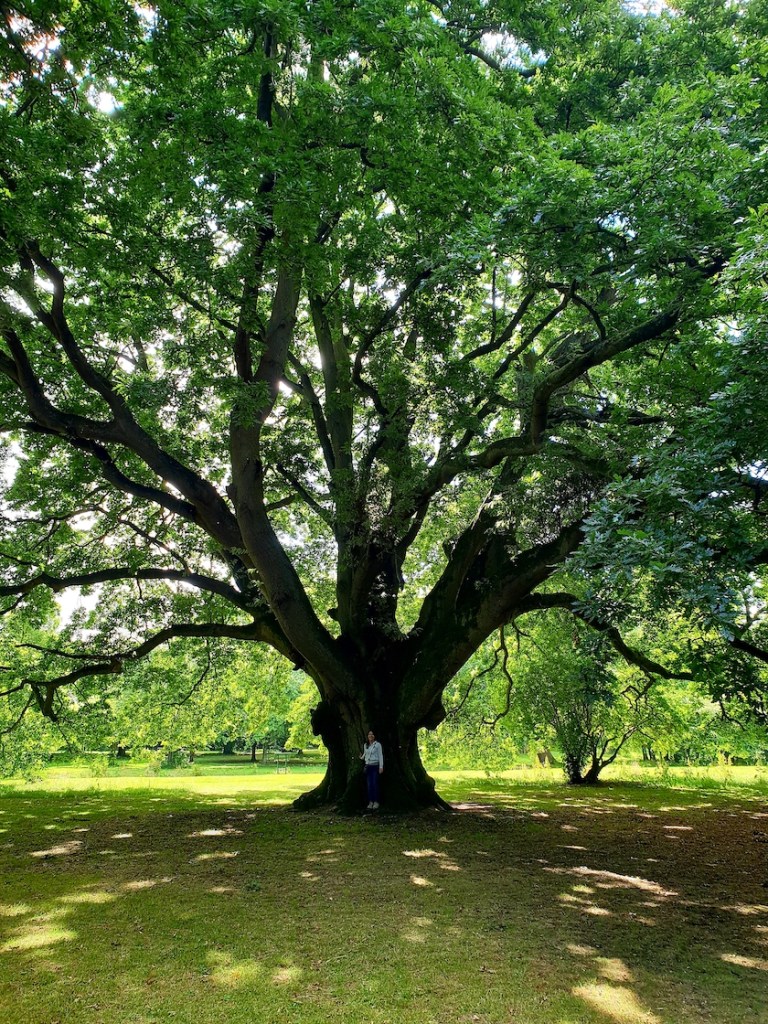
Oak trees are widespread in many forests around the world. They provide a majestic presence, and their large canopy offers ample shade. Oak trees are often associated with strength, resilience, and grounding.
- Pine
Pine trees are common in many parks and forested areas. They are associated with a pleasant and refreshing scent. In Japan, the practice of Shinrin-yoku especially emphasises spending time in pine forests due to the aromatic chemical compounds called terpenes emitted by the trees.
- Cypress
Cypress trees, also called “hinoki” in Japanese, are another popular choice for forest-bathing. They emit a pleasant fragrance and are known for their relaxing properties. Cypress wood is also used in traditional Japanese construction and bathing facilities.
- Cedar
Cedar, also called “sugi” in Japanese, are highly revered in Japanese culture. They are tall evergreen trees with aromatic wood. Cedar oil is among the most popular extracts in perfumery and is believed to have a calming effect on the mind and body.
Of course, as mentioned earlier, the benefits of forest-bathing extend beyond specific tree species. Please keep in mind that the overall environment, biodiversity, and the presence of natural elements such as streams or wildlife, can greatly contribute to your therapeutic experience.
So…
The idea behind Shinrin-yoku or forest-bathing was to encourage people to reconnect with nature by spending more time in natural environments and using all of their senses to engage with the natural world. Shinrin-yoku was supported by the Japanese government and has now become a widely accepted practice for promoting health and well-being.
Today, Shinrin-yoku has gained popularity worldwide as a way to counterbalance the fast-paced, technology-driven modern lifestyle. Many countries have embraced the practice and established some designated forest therapy trails, including guided forest-bathing sessions led by trained practitioners.
To my knowledge, there are many guided forest-bathing tours available in the UK and can be booked online. Alternatively, with the abundance of the UK’s natural resources and beautiful landscapes, you can also take advantage of local forests, national parks, and walking trails across the country, free of charge.
If you live in different locations, I suggest exploring comparable services in your area. Remember that you don’t need to be in an actual forest to reap the benefits; spending time around trees and nature is also just fine.
Luckily, I grew up in a suburban setting and my life has always been in reasonably close proximity to nature. At my current home in a seaside town, it takes me only 10 minutes on foot to reach either the local park and the sea or the foot of the hill in the opposite direction. I can easily spend an hour in the evenings walking among nature, which I do at least twice a week and feel grateful for. On weekends, a trip to the local forests is quite common for me.
I started practicing my own forest-bathing sessions long before I got to know the idea of Shinrin-yoku. I guess it’s also something that comes naturally for many people too.
Thinking about giving yourself an opportunity to reconnect with nature and rejuvenate your senses? What about a little forest-bathing session this weekend?
If you can allocate only half an hour per week for a peaceful walk in a forest, or simply sitting in a park, imagine the positive impact this practice can have on your mental health and overall-being in a long run.
All rights reserved. Used by Permission of DeepGamma.

 DeepGamma.
Leave a reply to 5 Reasons Why Good Mental Health and Mindfulness Actually Improve Brain Health – DeepGamma. Cancel reply