Some hobbies not only provide enjoyment and relaxation, but also stimulate the brain and promote cognitive development.
If you enjoy paper folding, chances are you made a paper plane or two. But if you also have a passion for Japanese art, the world of Origami likely needs no introduction. This ancient art form offers more than just a sense of accomplishment; it can be surprisingly addictive, engaging both the mind and the senses in a way that’s hard to resist.
Origami‘s beauty lies in its blend of simplicity and elegance. Origami‘s techniques and designs in origami can range from basic to highly complex. That’s why I call origami the art for the brain.
For many people, Origami is taken beyond mere hobbies or childhood pastimes. It requires focus, patience, and precision. It can also reveal much about our inner selves. Let’s find out why Origami is more than just the art of paper folding and how we can use it as a tool for boosting our brain and creativity.
What is Origami?
Origami is the art of paper folding in Japan. The term “Origami” comes from two Japanese words: “ori” meaning “fold” and “kami” meaning “paper”.
In Origami, a single sheet of paper is made into a variety of shapes and forms through certain folding techniques, without cutting or gluing.
Traditional Origami
While paper folding has been practiced in various forms in different cultures throughout history, it was in Japan where the art flourished and became deeply ingrained in the culture.
The origin of Origami dates back to at least the 17th century with the introduction of paper from China. During the Edo period (1603 – 1868), origami gained popularity among the nobility, samurai, and eventually the commoners.
Origami in the Edo period primarily focused on creating simple yet elegant geometric shapes inspired by nature, such as animals and flowers. Cranes and boats were among the common designs. The artwork was often used for decorative purposes or enhancing ceremonial events.
Origami masters and professionals honed their skills through years of practice and experimentation, and their expertise was highly sought after. Different folding techniques and designs were developed during this time and were passed down through generations.The Origami techniques were often kept as family secrets. Sometimes they were only shared within specific groups or communities.
Modern Origami
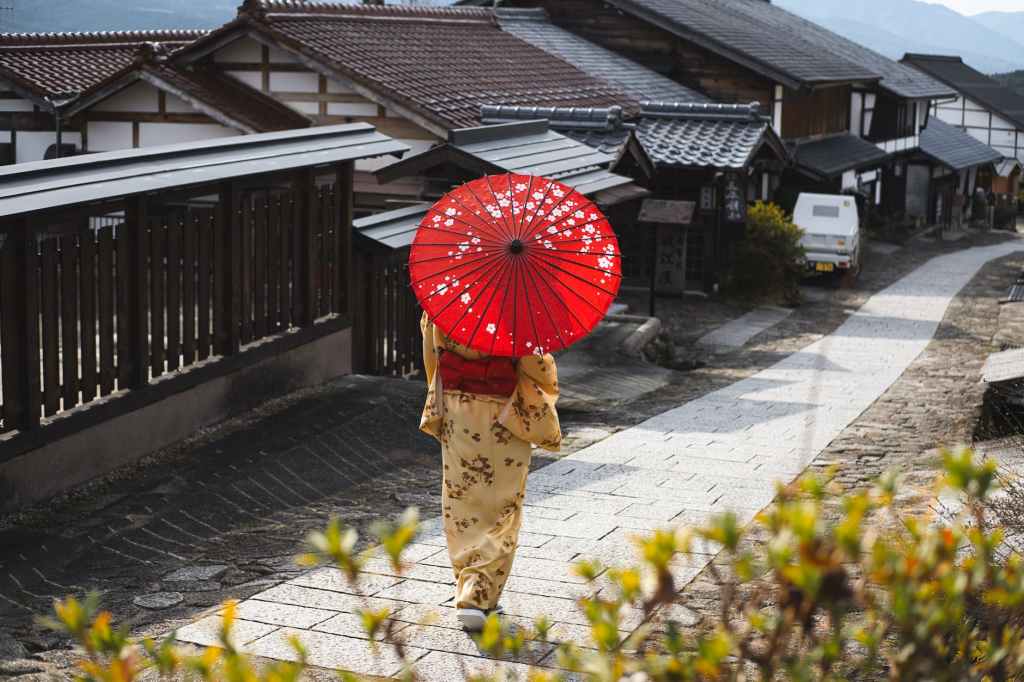
While traditional Japanese origami often featured simple, geometric shapes inspired by nature, modern Origami sees more complex designs. Even though we saw some early manuals and folding diagrams created during the Edo period to preserve Origami knowledge, Origami continued to evolve in the following centuries.
In the 20th century, through the contributions of several artists who expanded folding techniques and more creativity, Origami had a significant transformation. It was Akira Yoshizawa, who significantly contributed to the modern development and popularisation of origami. He was considered one of the modern grandmasters of Origami and developed a system of symbols and diagrams for folding instructions. This made the art more accessible.
Of course, the collective efforts of many artists and enthusiasts have pushed the boundaries of Japanese Origami’s complexity and the possibilities of today designs and applications.
What is Orizuru?
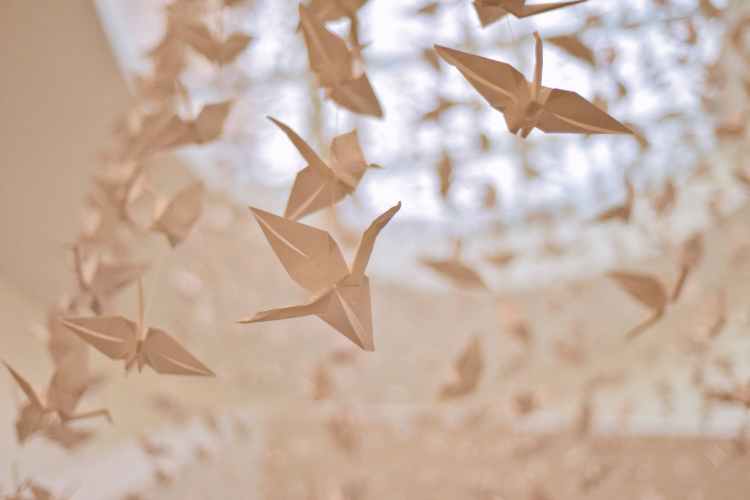
It’s a traditional design and one of best-known of Japanese Origami designs. We already know that “ori” means “fold”. The word “tsuru” means “crane” in Japanese. Orizuru is a folded paper crane, also known as a good luck crane.
Orizuru is often associated with the story of Sadako Sasaki, a young girl who developed leukaemia as a result of the atomic bombing of Hiroshima during World War II. She believed that if she folded 1,000 paper cranes, she would be granted a wish for good health. Why cranes? Traditionally, cranes symbolise longevity, good fortune, and protection from harm.
Though Sadako didn’t manage to fold 1,000 cranes before she passed away, her story inspired many others, and the crane became a symbol of peace and hope.
Today the Orizuru is widely recognised as a symbol of peace, healing, and good fortune. Japanese people fold and display paper cranes as a gesture of goodwill, particularly in times of tragedy.
Benefits of Folding Origami
Origami should never be considered a mere recreational activity. Since humans have an innate drive for learning and personal growth, challenging activities like Origami offer opportunities for skill development and self-satisfaction.
1. Cognitive Stimulation
Folding Origami involves coordinating both hands which helps improve communication between the brain’s hemispheres. When both hemispheres are stimulated and coordinated by tasks that require creativity, memory, spatial reasoning, and problem-solving, overall brain health is also fostered.
2. Mind Training
Origami teaches us the importance of patience and precision. It’s also great for training the brain to focus on the task at hand, pay attention to detail, and stay present in the moment. These core skills are transferable and are much needed across different areas of life today.
3. Flow State
By engaging the brain with repetitive and sequential steps, we can enter a state of “flow”.
This is when the brain is fully immersed and focused on the task at hand. The flow state makes us experience a sense of timelessness, increased motivation, resulting in more confidence and higher productivity.
4. Sense of Accomplishment
When successfully completing a challenging activity, such as Origami’s complex design, we get a sense of accomplishment and happiness. Our self-esteem is boosted and neurotransmitters like dopamine are released.
The brain craves positive emotions and the satisfaction from achieving a challenging task satisfies this need.
5. Science and Maths Concept Learning
Origami helps us understand basic concepts in mathematics, science, and engineering. Think about when you learned to make your first paper plane or boat. It can be used to teach concepts of geometry, and symmetry. Logical-thinking is certainly required here.
6. Therapeutic Activity
Origami is certainly a therapeutic activity. Today it’s being used in many settings, including hospitals, schools, and mental health facilities. The repetitive folding motions are believed to have a soothing and calming effect on the mind. It’s a simple yet effective activity for stress relief and relaxation for people of all ages.
7. Self-Reflection
Benefits of origami certainly go beyond the physical and mental health. Personally, I also find origami a process of introspectively examining and evaluating my own thoughts, emotions, and experiences. It turns my attention inward and, with that, I become aware of myself on a deeper level.
Origami gives me a sense of tranquillity yet vigilance. If we make a mistake, we can unfold the paper and trace back the steps but the end result won’t be quite the same. Even a tiny careless mistake along the way, can take us to a totally different destination. Perhaps life is also like that.
Fun Facts and Myths about Folding paper
This isn’t directly related to Origami but you may have heard that a piece of paper can’t be folded in half more than 8 times, considering the width and growing thickness of the paper, according to the exponential growth involved. Well, it’s now proven to be a myth. You can actually fold it as many times as you want, but the problem is “Can you?”
According to the mathematical calculation proposed by experts, if the following is ever possible:
- 8 folds will give the paper’s thickness the structural quality of steel
- 30 folds will make the paper about 100 km high
- 42 folds will get you to the Moon
So…
All in all, it’s amazing to think how much one can learn from folding a tiny piece of paper.
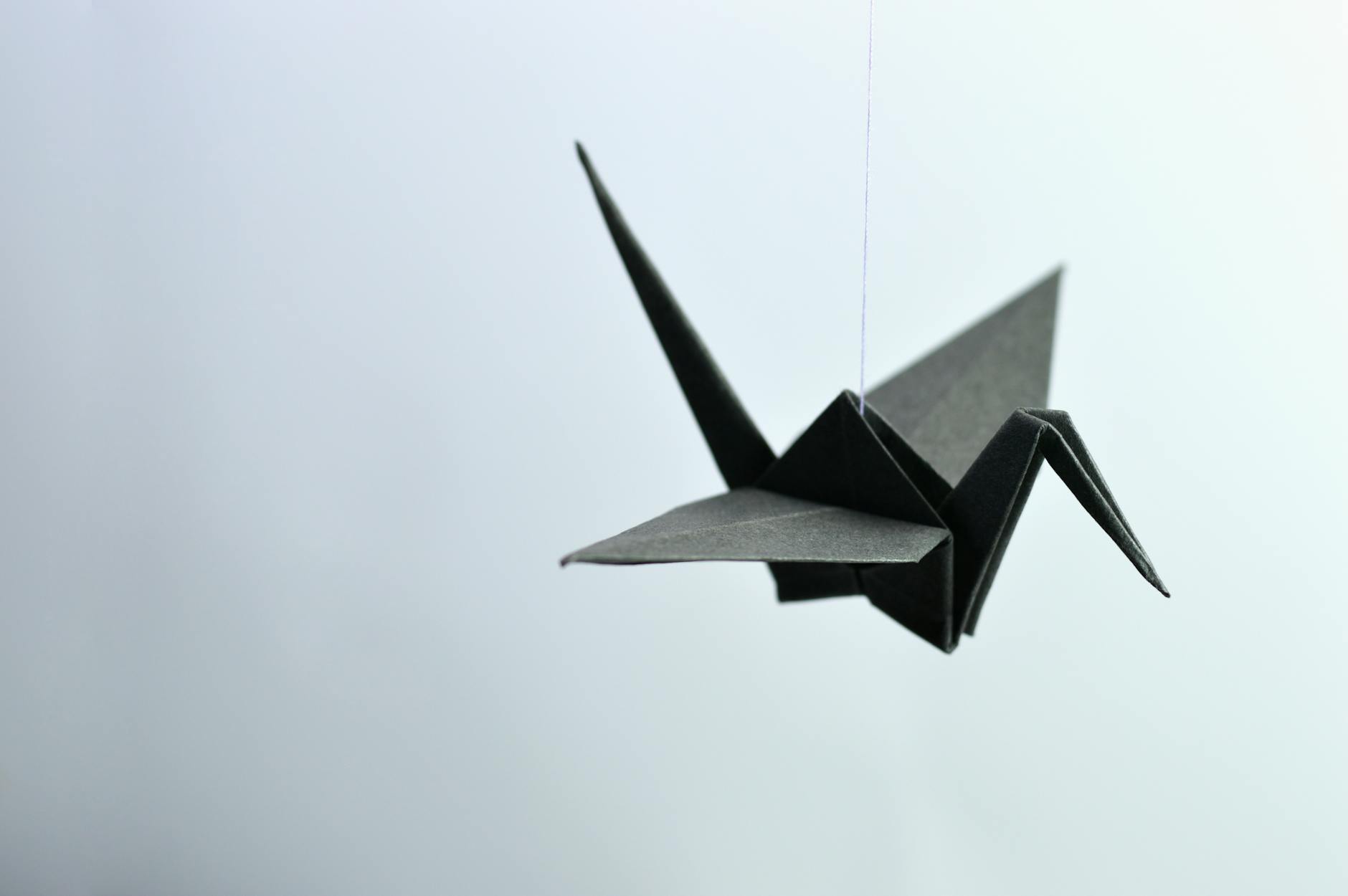
I learned to make my first crane Origami when I was about ten years old. It was a craze among school kids (probably in almost every school) at that time. My school was a girls school so it only took a blink of an eye for the trend to spread.
During the lunch and mini breaks, classrooms, outdoor benches, staircases and hallways were flooded with girls and pieces of paper, quietly but happily folding tens or hundreds of crane Origami. You may be able to guess what we tried to give each other on birthdays and special occasions even though nobody had a fatal sickness or suffered from tragedy. Crane Origami!
The art of origami is ingrained in me. I’ve enjoyed collecting scrap paper and learning to make different more designs ever since.
Origami is certainly a holistic activity that can benefit the brain, the mind, and the soul.
I highly recommend it if you’re looking to develop creativity, motor skills, and mental discipline for yourself or your child.
Plus, Origami gives you a creative way to reuse old leaflets and junk mail, making it a mindful activity that’s good for both your brain and the environment.
All rights reserved. Used by Permission of DeepGamma.
 DeepGamma.
Leave a comment