Like many logic-game enthusiasts, I take pleasure in solving Sudoku puzzles.
I’ll grab my book of Sudoku and sit on the sofa whenever I need a quick fun mental exercise to keep my brain active on a lazy day. On rainy days when I’m a little stressed out, I turn to Sudoku puzzles to calm the mind down. Even though I can’t solve the whole puzzle in the 15-minute time slot, it’s already satisfying to know that the numbers I filled are in correct places.
Paradoxically, Sudoku, for many people, is a relaxing yet productive activity for the brain. It sometimes can be addictive. Why so? The popularity of Sudoku lies in the first hand experience and positive effects the players get consciously and unconsciously. Keep reading to find out more.
Sudoku Puzzles
Sudoku is a popular logic-based puzzle game that has captured the attention of puzzle enthusiasts of all ages and skill levels around the world in recent years. One of the reasons for the game’s popularity and addictiveness is believed to be its simplicity and accessibility.
The game is based on logic. The rules are easy to understand, plus it can be played with just a pen and paper or on a computer or mobile device. This makes it easy for people to take the game with them wherever they go and play it whenever they have a few spare minutes.
For those who enjoy solitary activities, Sudoku provides a way to challenge yourself and improve your mental agility. However, for those who enjoy social activities, Sudoku can also be a great way to engage with others. Also, Sudoku competitions and tournaments are held around the world. This adds a level of excitement and competitiveness to the game, making it even more engaging for some who love challenges.
History of Sudoku
People often associate Sudoku with Japan because the modern version of the puzzle that we know today was popularised in Japan in the 1980s, and was published in Japanese puzzle magazines under the name “Sudoku”, which means “single number”.
However, Sudoku as we know it today was actually not invented by a single person, but rather developed over time through the work of many individuals. You may be surprised to know that the puzzle’s origins and development are actually more diverse and complex than many people realise.
The puzzle actually traces back to Switzerland in the 18th century, where a mathematician named Leonhard Euler created the concept of Latin squares, which later inspired the development of Sudoku.
It’s claimed that the modern version of Sudoku was actually developed in the United States in the 1970s by an American puzzle designer named Howard Garns. At the time, it was called “Number Place”. Later, the puzzle was renamed Sudoku by the Japanese company Nikoli Co., Ltd., and gained popularity in Japan in the 1980s – 1990s. The publisher is credited for spreading it worldwide in the early 2000s by publishing the first Sudoku puzzles in English. Their efforts led to the puzzle’s widespread adoption and popularity in many countries around the world.

Latin Squares vs Sudoku
Latin squares are grids filled with symbols or numbers in such a way that no symbol or number repeats in the same row or column.
Latin squares are important in mathematics and computer science because they have applications in coding theory, cryptography, and experimental design.
Sudoku is a variation of this concept, with the added constraint that each row, column, and 3×3 box must also contain all of the numbers from 1 to 9 without any duplicates.
The word “Sudoku” is actually a combination of two Japanese words: “su”, which means “number”, and “doku”, which means “single”.
How to Play Sudoku
Many people may have already been familiar with Sudoku puzzles to some extent. However, I think it’s worth introducing the rules in this article as it might benefit some interested beginners.
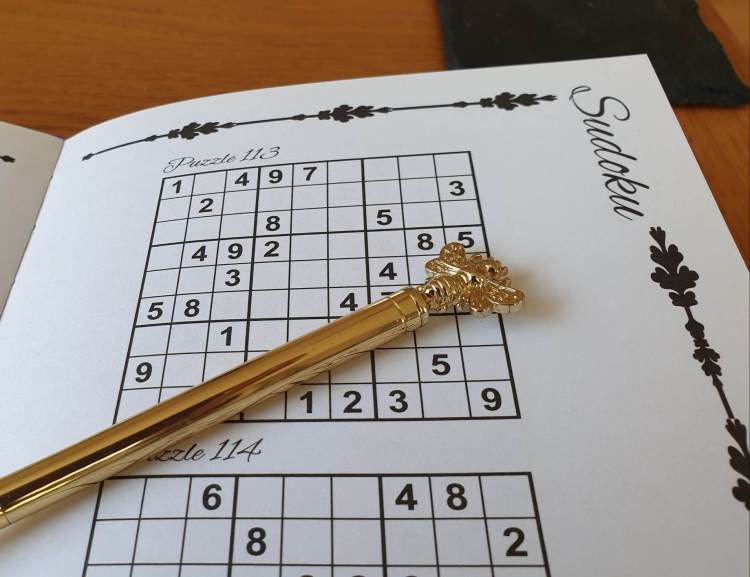
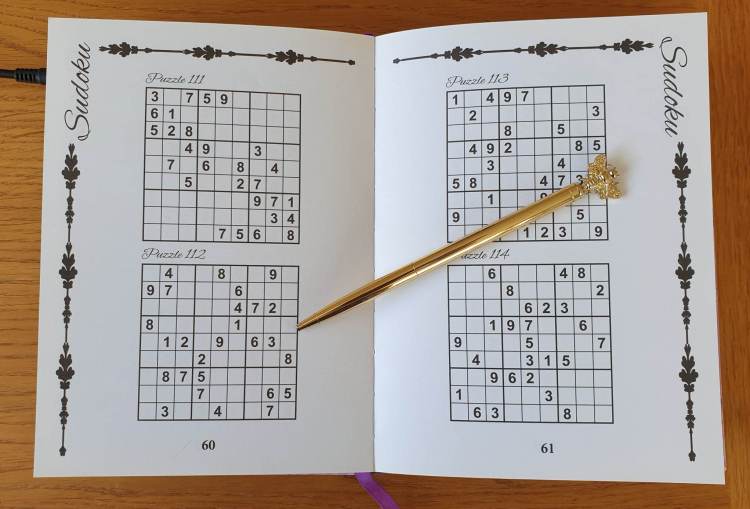
The game is played on a 9×9 grid, which is divided into 3×3 boxes. The goal of the game is to fill the grid with numbers from 1 to 9 in such a way that each row, column, and box contains all of the numbers from 1 to 9 without any repetition.
At the start of the game, a few numbers are already placed in the grid, and it’s up to the player to use logic and deduction to fill in the remaining cells with the correct numbers. The puzzle is typically considered to be easy, medium, or hard based on the number of cells that’re already filled in and the level of logical reasoning required to solve it.
Sudoku in Japan
Japan has produced many talented Sudoku solvers and creators over the years.
Despite not having its origin in Japan, there are several Sudoku events and competitions that take place in Japan each year. These events attract both amateur and professional Sudoku enthusiasts from all over the world.
One of the most popular Sudoku events is the World Sudoku Championship (WSC), which has been held annually since 2006. The event is organised by the World Puzzle Federation and features a variety of Sudoku competitions, including team competitions and individual puzzle-solving challenges.
Even though the WSC is not always held in Japan, it has been hosted in Japan several times in the past. So far, Kota Morinishi of Japan has been the most successful winner of all championships held with four individual titles (2014, 2015, 2017, and 2018).
In addition to the WSC, there are also many other Sudoku events held throughout Japan, including local and regional tournaments, puzzle competitions and even Sudoku-themed festivals. Nikoli Puzzle Festival in Tokyo, organised by Nikoli, Hiroshima Sudoku Championship, and Sudoku Summit in Kobe are some popular examples among others.
Benefits of Playing Sudoku
Sudoku has been shown to have several cognitive benefits by improving the overall functioning of the brain. Here’re some key areas that you may find interesting:
1. Improved Memory
Completing Sudoku puzzles requires the player to remember the patterns and logical rules. This means you need to remember numbers you’ve already used in the puzzle, as well as the possible numbers that can be used in each cell. This helps to exercise your short-term memory, which is the ability to retain information for a short period of time.
Also, playing Sudoku can improve working memory, which is the ability to hold and manipulate information in your mind over short periods of time. You’re required to keep track of numbers, eliminate possibilities, and make decisions based on the task at hand.
This may seem to be a subtle action but can help you improve your short-term memory and working memory and the ability to recall information in a long run.
2. Increased Concentration
Sudoku requires a high level of concentration to solve the puzzle, as the player must focus on the numbers and their positions within the cell.
While doing Sudoku, you need to focus on the task at hand. As you work through the puzzle, you’re fully engaging your brain and keeping it active. This can certainly help you improve concentration skills, making it easier to subsequently stay focused on tasks in other areas of life.
3. Boosted Logical Reasoning and Problem-Solving Skills
Sudoku challenges the player to use logic and deduction to solve the puzzle which are parts of problem-solving skills.
The player must analyse the information available to them, apply logical reasoning, and make decisions based on that information by using deduction to fill in the missing numbers. With no doubt, regularly practicing Sudoku can help improve your logical reasoning problem-solving skills over time.
4. Promoted Neuroplasticity
Neuroplasticity is the brain’s ability to form new neural connections and adapt to new information.
Sudoku requires the player to use a variety of cognitive skills, including the aforementioned problem-solving, critical thinking, and pattern recognition. These skills activate different areas of the brain. As the puzzles become more challenging, the brain has to work harder to solve them. This can subsequently strengthen existing neural connections and creates new ones.
5. Improved Mindfulness and Relaxation
Some people think about Sudoku as a mindful activity, which means it involves paying attention to one’s thoughts and feelings.
Playing Sudoku requires the player to focus on the present moment. With total concentration and focus on the task at hand, it can help some people take their mind off stressful thoughts and worries. This may not work for everybody, but focusing on the present moment may make you achieve a sense of calm and relaxation.
Sudoku for the Brain
Sudoku is certainly a quick exercise that effectively boosts concentration and brain power. When successfully completing a sudoku puzzle, the brain experiences a sense of accomplishment and satisfaction. The feeling of achievement is a powerful and necessary motivator for humans. It’s what keeps us coming back for more, leading to improved skills and better performance.
Also, Sudoku normally comes in a variety of difficulty levels and layouts, which keeps the game fresh and challenging. This variety provides an opportunity to continually sharpen our skills and try new strategies.
With that being said, I have created simple Sudoku puzzles for my young nephew, his friends, and my sister to play and I enjoy the process so far. I can make it my way and choose the right level of difficulty for them. I test the puzzles myself to make sure there is only one possible solution for each puzzle.
While creating Sudoku puzzles from scratch can be fun, it’s also challenging and time-consuming. For those who prefer a quicker method, there are many websites allowing people to generate free puzzles with solutions provided.
So..
All in all, Sudoku is certainly a great puzzle game for the brain. From my own experience with Sudoku for nearly twenty years, I know it constantly helps me with concentration, logical thinking and relaxation, especially when solving the puzzles with pen and paper.
Despite the rise of modern technology and virtual reality (VR) games, in many parts of the world people still find Sudoku an intellectual, engaging, and satisfying puzzle game that keeps them coming back for more. Its accessibility, simplicity, and mental stimulation make Sudoku a popular pastime, especially here in the UK.
Nowadays, an array of mobile apps and online Sudoku communities has made it even more accessible for people worldwide so they can easily connect with others who share passion for the game.
Whether you’re a novice or a veteran puzzler, if you’re looking for a decent platform for Sudoku discussion and collaboration, or just a sense of community, you can check www.sudopedia.org. You’ll find a collection of websites that offers daily Sudoku puzzles in various degrees of difficulty, including useful background information and solution tips.
All rights reserved. Used by Permission of DeepGamma.
 DeepGamma.
Leave a comment